What Traditional Brands Get Wrong About Web3
Web2 brands entering Web3 apply their existing playbook: broadcast campaigns, paid media, influencer deals. Then they wonder why crypto-native audiences ignore them.

I was in a meeting a couple of years ago with a major consumer brand exploring Web3. They had a budget, a timeline, and a deck full of "Web3 activation" ideas. Banner ads on crypto news sites. An influencer campaign with a handful of big-name KOLs. A launch event with champagne and QR codes.
Everything in the deck was a Web2 tactic with a blockchain wrapper. They were going to broadcast their way into Web3 the same way they'd broadcast their way into every other channel.
It didn't work, and the budget and creative weren't the reason. Web3 audiences operate on fundamentally different assumptions, and the brand hadn't bothered to learn what those assumptions were.
This keeps happening. Big organisations with real resources and genuine intent keep walking into Web3 and making the same category of mistake. They're rarely lazy or stupid; they're applying a mental model that doesn't fit, and nobody inside the organisation has enough authority to tell them.
Why the Web2 playbook doesn't transfer to Web3
Traditional brand marketing is a broadcast model. You create a message, buy reach, push it to an audience. The audience receives it passively. Success is measured by who saw it and who acted. The brand controls narrative, timing, distribution.
This works when you have distribution advantages. Media buying power, brand recognition, agency relationships. In Web2, these advantages are decisive. Bigger budgets buy more impressions and better agencies produce better creative, so scale equals reach equals results.
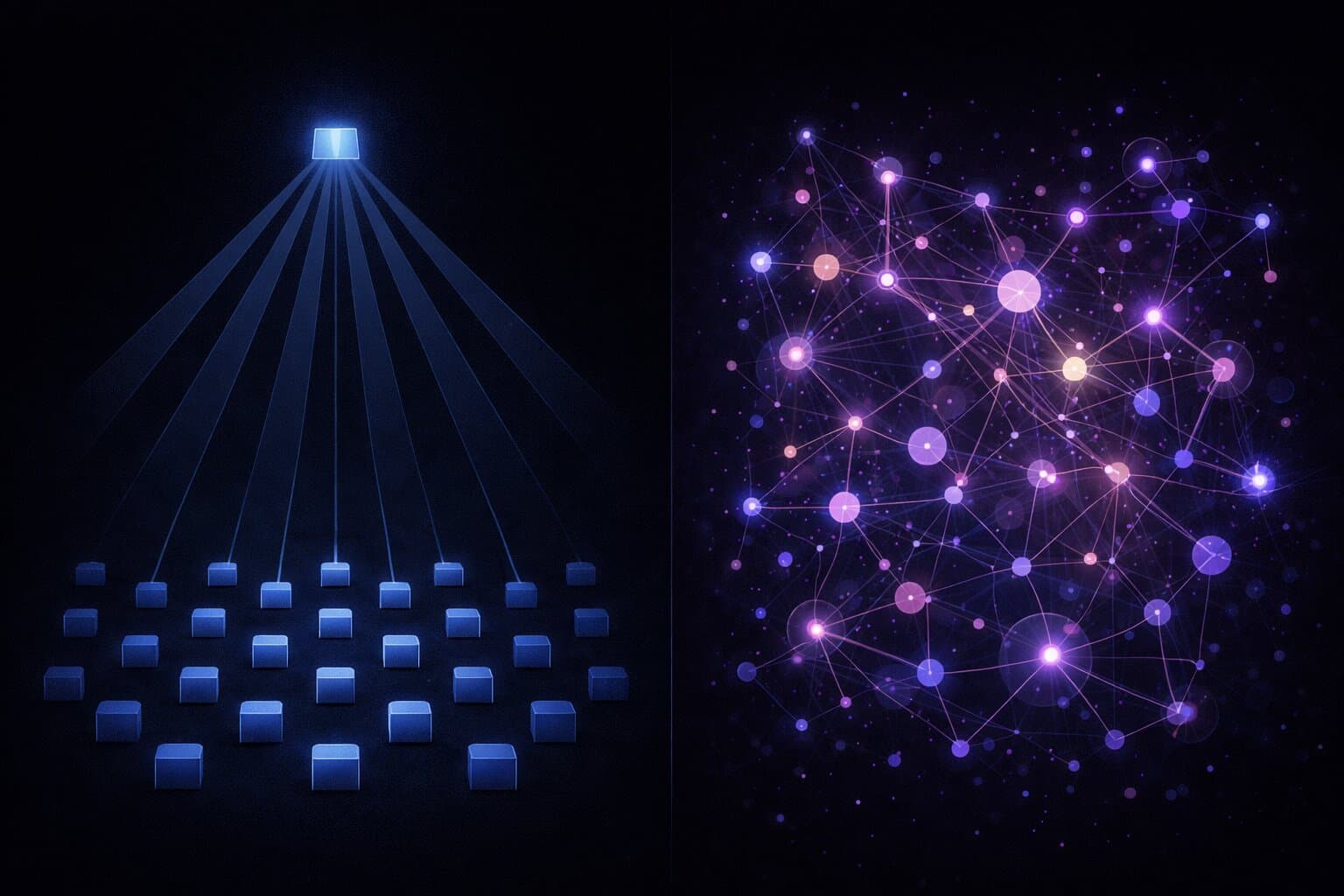
Web3 doesn't work this way, mainly because the audience changed the rules (the technology changed the economics too). Crypto-native communities are participatory, sceptical, and allergic to being marketed at. They grew up in Discord servers, governance forums, and Twitter threads where they have a voice. They're used to engaging with projects as peers, not as consumers receiving messages from brands.
When a traditional brand shows up with a broadcast campaign, the audience reads it immediately. A corporation trying to extract value from a community it doesn't understand. The reaction ranges from indifference to active hostility.
Porsche learned this when they launched their 911 NFT collection at 0.911 ETH (about $1,500 at the time) during a fragile market recovery. The pricing assumed brand equity would translate directly into willingness to pay. It didn't. Porsche halted the mint after two days with roughly 16% of the 7,500 supply sold, secondary prices dropped below mint, and the community's response was blunt enough that CoinDesk framed the episode as a lesson in letting Web3 natives take the wheel. You can't charge a premium for a name when the market values participation over prestige.
Launching an NFT was reasonable; the mistake was assuming that pricing power transfers into a market where credibility is earned through participation, not inherited from legacy reputation.
Web3 is not a channel
Most traditional brands treat Web3 as another place to run campaigns. That's the root of the misunderstanding. Web3 is a structural shift in how products work, how value flows, and how relationships between brands and people are organised.

Participation replaces broadcast. Web3 audiences want to do things, not watch things. Mint, vote, contribute, build, co-create. Lacoste understood this with UNDW3, a gamified ecosystem built around 11,212 crocodile-motif NFTs, where holders do more than collect tokens: they climb leaderboards, complete quests, and co-create product designs directly with the brand. The NFTs evolve based on participation. The more you contribute, the more your asset reflects that contribution. It works as a product mechanic rather than a campaign.
Ownership changes behaviour. When someone has on-chain ownership with verifiable provenance, their relationship to the project changes in ways that traditional customer relationships can't replicate. Prada's Timecapsule drops connect physical limited-edition items to NFTs with matching serial numbers on Ethereum. The provenance is real. The ownership is verifiable. The collector's relationship to the brand stops being transactional and starts resembling something closer to partnership.
Community is not an audience. An audience receives messages. A community generates them. Traditional brands build audiences, people who pay attention to what the brand says. Web3 projects build communities, people who talk to each other, create content, make governance decisions, and feel genuine ownership over the project's direction. Most traditional marketing structures aren't designed for this.
None of this makes marketing fundamentals irrelevant. Positioning, measurement and audience understanding all still matter. I've written about the gap between product knowledge and marketing discipline in the context of agencies, and the same dynamic plays out with brands. The ones that assume Web3 replaces the need for marketing rigour fail just as badly as the ones that ignore what Web3 changes. A solid strategy foundation is still the prerequisite for success in any channel.
The organisational problem: why Web3 expertise gets overruled
There's a pattern I've seen repeatedly inside large organisations exploring Web3, and it rarely gets discussed because it's uncomfortable.
The organisation acquires a Web3 company or builds an internal team. Subject matter specialists get hired. Product managers who understand token mechanics, protocol design, and community dynamics join the business. The expertise exists. The knowledge is there.
But strategic decisions still flow through the existing hierarchy. A general manager who's been in the business for twenty years, with minimal exposure to the technology, ends up as the final decision-maker on Web3 strategy. And in my experience, it doesn't help that they're often deeply reluctant to defer to the specialists who've already spent years working with the tech. There's an ego component that's hard to separate from the structural one. When you've been the decision-maker for two decades, accepting that a product manager three levels below you understands the market better than you do is a difficult pill to swallow. Some manage it. Many don't.
What happens next is predictable. Web3 gets forced into Web2 mental models. Token-gated experiences become "loyalty programmes." Community governance becomes "customer feedback." On-chain provenance becomes "a digital certificate." The language shifts to make it palatable to senior stakeholders who don't understand the original concept, and in that translation, the thing that made it valuable gets lost.
The Web3 specialists in the room see this happening. They raise concerns. They explain why the watered-down version won't resonate with the target community. And they get overruled, because the person with the senior title has final say, and that person is pattern-matching against twenty years of experience that doesn't apply here.
I sat on a call once where, after a year of work, an executive proposed renaming a Web3 initiative "Web2.5" to make it more palatable for their existing audience. A year of development, positioning, and community building, and the instinct was still to sand off the edges until it fit into a familiar box. That moment captured something I've seen in different forms across multiple organisations. The expertise is there. The willingness to listen to it often isn't.
Hierarchical decision-making works well in established markets where the senior people have relevant pattern recognition. It works badly in emerging markets where the relevant pattern recognition sits further down the org chart.
The NFT perception problem: why brands still avoid the word
NFTs became toxic in mainstream brand conversations sometime around 2022. The speculative bubble, the rug pulls, the celebrity cash-grabs. All of it created an association between "NFT" and "scam" that most brand marketing teams are still navigating around.
Understandable. The hype cycle did real damage. But the technology underneath the hype remains genuinely powerful, and writing it off because the first wave of applications was mostly speculative is a mistake.
Provenance and identification are the capabilities that matter. Verifying on-chain that a physical item is authentic. Proving ownership history. Attaching evolving digital properties to physical objects. Far from speculative, these are infrastructure-level capabilities that solve real problems in luxury goods, collectibles, supply chain verification, and loyalty.
The failure lay in the framing and incentives rather than the technology. When NFTs were positioned as speculative financial instruments, they attracted speculators, and the behaviour that followed was predictable. When the same technology is positioned as provenance infrastructure or access credentials, it attracts a different audience and produces different outcomes.
Reddit showed what good framing looks like, at least initially. Collectible Avatars onboarded users to blockchain wallets without ever saying "NFT" or "blockchain": more than five million avatars minted on Polygon by December 2022, and, by Reddit's own engineers, over eight million people holding a Vault wallet by mid-2023. The UX was familiar avatar customisation. Payment was standard fiat. The complexity was invisible. It was one of the largest Web3 onboarding events in history.
But the Reddit story also illustrates the risk. Reddit has since sunset the programme, closing the Avatar Shop and retiring the in-app Vault, giving holders until the start of 2026 to export their recovery phrases. The community backlash was significant. What had been the best example of Web2-to-Web3 onboarding became a cautionary tale about corporate commitment. The onboarding was brilliant. The follow-through wasn't. And that pattern, impressive launch followed by quiet retreat, is one that keeps repeating across big-brand Web3 initiatives.
Where brands have actually got this right
The interesting cases are the ones where Web3 gets layered into existing behaviour so naturally that the user barely notices the technology, rather than the flashy launches.

Lufthansa's Uptrip programme lets passengers scan their boarding passes to collect NFT trading cards on Polygon, which they combine into sets to unlock rewards like lounge access, in-flight Wi-Fi and redeemable miles. Nobody needs to understand blockchain. They scan a boarding pass they were going to scan anyway. The Web3 layer adds value without adding friction.
Blackbird did something similar in restaurants. They built a loyalty and payments platform that created over 100,000 wallets for diners who signed in with a phone number and never needed to know they had one. The customer experience is just a restaurant app. The infrastructure underneath is Web3.

Pudgy Penguins took a different route. Physical toys in 2,000 Walmart stores, each carrying a birth certificate with a QR code that claims digital traits inside Pudgy World. The physical toy is the onboarding mechanism. NFT holders earn ongoing royalties from toy sales, which means the existing community directly benefits from mainstream distribution. It's one of the cleaner examples of a Web3-native project crossing into traditional retail without losing what makes it work.
Mercedes-Benz NXT earned credibility by not trying to manufacture it. Instead of launching a branded collectible and hoping people cared, they partnered with established digital artists and communities like Fingerprints DAO. The brand positioned itself as a participant in digital art culture rather than a tourist passing through.
Mastercard's Artist Accelerator gave emerging musicians Web3 tools to mint, build communities, and monetise their work directly. The value flowed to the creators, not from them. That inversion is what separates Web3 brand engagement that resonates from the kind that gets ignored.
The common thread across all of these is restraint. None of them led with the technology or asked their audience to care about blockchain. They built something useful and let the infrastructure stay invisible.
What I learned from doing this early
I should be transparent about my own experience, because it's relevant to the argument.
I worked with the Sacramento Kings on one of their early blockchain initiatives. The Kings were ahead of nearly everyone, the first professional sports team to accept Bitcoin payments back in 2014, one of the first to mine cryptocurrency at their arena. They were genuinely exploring what the technology could do, not running a marketing stunt.

I worked with them on CryptoKaiju, a project bridging physical vinyl toys with NFC chips linked to ERC-721 tokens on Ethereum. Each Kings themed toy could be scanned to verify its provenance and ownership on-chain and a select few included exclusive Kings experiences and prizes.
We had plans for physical treasure hunts combining location-based experiences with on-chain collectibles. Then Covid happened. Nobody saw that coming, and it killed the timeline completely. Physical events were off the table overnight. By the time the world reopened, the landscape had shifted underneath us. Licensing had become complex negotiations around IP rights in digital assets. The environment we'd been building for no longer existed in the same form.
That was bad luck rather than a strategic failure. The concepts were sound, CryptoKaiju's model of verifiable provenance for physical collectibles is essentially what luxury brands are now building at scale, and the Sacramento Kings' infrastructure-first approach anticipated where the industry eventually moved. But timing in Web3 is brutal, and sometimes the external circumstances simply don't cooperate.
The takeaway for brands is narrower than "plan for disruption": Web3 initiatives carry timing risk that most brand strategy documents don't acknowledge. Regulatory shifts, market sentiment swings, licensing frameworks that haven't caught up with the technology. These are the normal operating environment rather than edge cases.
The counterexamples worth studying: Nike, RTFKT and Reddit
Not every well-resourced effort works, even with strong intent.
Nike's acquisition of RTFKT and the launch of the .SWOOSH platform was one of the most ambitious corporate entries into Web3. Acquire native expertise, build a digital product platform, let community members co-create and earn royalties. RTFKT drove more than $1.5 billion in NFT trading volume. But Nike wound the unit down at the end of January 2025, and sold it off entirely later that year. The tension between corporate governance and Web3-native operations proved difficult to sustain. The strategic logic was sound. The organisational reality wasn't compatible with it.
Reddit's trajectory is equally instructive. The Collectible Avatars programme demonstrated that invisible Web3 onboarding works at massive scale. Millions of wallets, no blockchain jargon, seamless payments. Then the programme got shut down. The bridge between "user has a wallet" and "user is an active, long-term participant" turned out to be the hard part, and the corporate will to maintain it wasn't there.
Both cases point to the same friction, and it sat in neither the technology nor the market. It was the sustained organisational commitment required to operate in a space that moves faster than corporate governance structures are designed to handle. And when that commitment wavers, even the best strategic foundations don't save the initiative.
Where this leaves brands entering Web3 now
The speculative noise has cleared. The landscape is more navigable now for brands that actually want to build something.
But the entry point has changed. The brands that will get this right are making structural commitments instead of treating Web3 as a campaign channel or a quarterly experiment: integrating blockchain into product architecture, building community infrastructure that outlasts a single budget cycle, hiring people who understand both the technology and the market and giving them enough authority to make decisions.
Marketing fundamentals haven't gone anywhere. Positioning, measurement, audience understanding. These still matter. What's changed is the model. Broadcast, extraction and short-term campaigns designed around quarterly reporting don't work here.
What works is building something that creates genuine value for participants, making the technology invisible, giving communities real ownership, and being willing to commit for longer than most corporate planning cycles are designed to accommodate.
That's a harder conversation to have in a board meeting than "let's launch an NFT collection." But the brands that have this conversation honestly, and act on it, will build something that paid media simply cannot replicate.